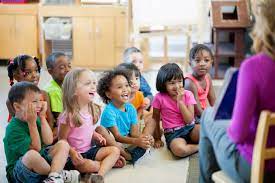
The Upper Saddle River Library will offer several storytimes for different age groups. All storytimes will incorporate the five practices to introduce early literacy skills, including singing, talking, reading, writing, and playing (Ghoting, 2013). The librarian will read picture books and use props such as a felt board and puppets to engage the children. A simple craft and circle time games will be part of the program. Song picture books will also be used. According to Jalongo (2015), song picture books are useful for learning language because there are clear connections between language development and musical development in children. Combining music, pictures, and text is a good way to develop early literacy skills.
The storytimes will have a different theme each week. This could include, baby animals, automobiles, farms, holidays, etc. All of the activities will incorporate the theme. The Children’s Department monthly theme will be used, as well. Picture books related to the weekly theme will be available for patrons to check out.
One of the five early literacy components will be incorporated into the storytime seach week (Ghoting, 2013):
Phonological awareness- the ability to hear and play with sounds in words, recognizing environmental sounds, the ability to hear syllables,, and rhyming. This component is critical to sounding out words when reading.
Print conventions and awareness-the concept that print has meaning and understanding that print is all around us. Understanding how to handle a book is part of this component.
Letter knowledge- Knowing that the same letter can look different and that letters have names and represent sounds.
Vocabulary– Knowing the meanings of words.
Background knowledge– refers to prior knowledge, or what children know before entering kindergarten.
Most of the storytimes will be enhanced storytimes. Parents/caregivers will be given three tips, or asides that demonstrate the connection between what the children are doing at storytime and reading. They can also be given information on how to support early literacy at home. Handouts explaining these asides, and with song lyrics and the titles of the books used during the storytime will be distributed,
The last 15 minutes of all storytimes will be free play. Age-appropriate toys will be available, such as puppets, blocks, a playhouse with a kitchen (including play food, pots and pans, and cooking utensils), stuffed animals, costumes, and crayons and papers.
Wee Ones Storytime: Ages Birth through 23 Months.
Tiny Tots Storytime: Ages 2 through 4.
Hooray for Pre-K Storytime: Ages 4 and 5- for children entering Kindergarten the following school year.
Family Story & Craft Time: For parents or caregivers and their children of all ages.
Bilingual Storytime: For all ages.
 Deb's Early Childhood Literacy Program
4 thoughts on “Storytime Overview”